
Information Security Level Protection, known as “等级保护 (Deng Bao)”, is China’s key regulation to safeguard information systems, with Level 3 (Supervision and Protection Level) focusing on critical systems related to national security, public interest, and important sectors such as finance and healthcare. The newly released GB/T 22239-2024 2025 edition introduces significant upgrades and new requirements for Level 3 protection.
This article deeply analyzes the detailed requirements, core technical upgrades, new highlights, and practical implementation roadmap for the 2025 Level 3 standard, assisting enterprises and security leaders in effectively promoting their Level Protection work.
—
## What is Level 3 Protection? — Core Interpretation of Level 3 Requirements in 3.0
Level 3 primarily applies to systems involving national security, public interest, finance, healthcare, education, and substantial personal data processing. Its key goals include:
– Defending against large-scale malicious attacks to ensure stable system operation
– Rapidly recovering core functions to minimize the impact of security incidents on business
The 2025 Level 3 standard covers comprehensive security from physical environment, network, devices, applications, data to management policies, emphasizing a multi-layered and multi-dimensional defense system integrated with modern security technologies and enhanced risk management.
For example, an internet healthcare platform must encrypt electronic medical records, implement multi-factor authentication and dynamic permission controls to protect patient privacy, and quickly respond to cyber attacks to restore critical healthcare services.
—
## Technical Upgrades in 2025 Level 3 Standard — Network Communication and AI Security Details
The GB/T 22239-2024 standard explicitly enhances the following core technical requirements:
### Physical Environment
– Concealed data center design
– Dual power circuits and UPS backup
– 24/7 video surveillance
– Biometric access control systems
### Network Communication
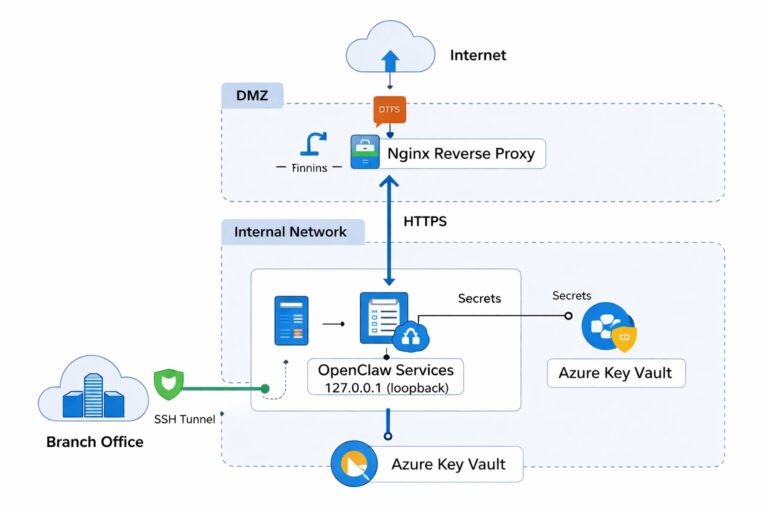
– Detailed network segmentation and boundary defense strategies
– Full traffic auditing combined with intrusion detection systems (IDS) for real-time threat discovery
– Mandatory adoption of TLS 1.3 or higher protocols to secure data transmission
### Device and Computing Security
– Unified endpoint management and prompt vulnerability scanning
– Enhanced malware prevention mechanisms
– Strict security baselines
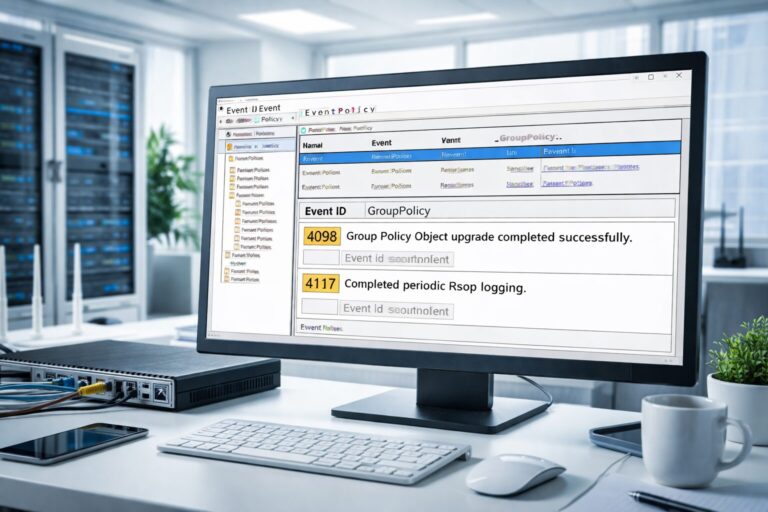
– Log collection and analysis to build threat traceability
### Application and Data Protection
– Enforced multi-factor authentication
– Least privilege and fine-grained access control
– Encrypted storage especially of sensitive information
– Backup and fast recovery mechanisms
– Compliance with privacy protection requirements
Additionally, the 2025 edition introduces new focuses on AI security, cloud-native security, IoT security, and zero trust architecture:
– **AI Security**: Model evaluation, prevention of poisoning and adversarial attacks to safeguard algorithm and data integrity.
– **Cloud-native Security**: Security strategies for containers, microservices, and service meshes aligned with modern application architectures.
– **IoT Security**: Device authentication, link encryption, and remote firmware updates to mitigate risks from massive device connectivity.
– **Zero Trust Architecture**: Identity as security boundary with continuous trust assessment and dynamic access authorization.
For instance, a financial company deploying AI risk control models must establish model risk evaluation processes to prevent malicious data poisoning or adversarial attacks, thereby enhancing defense from the root.
—
## Implementation Roadmap and Certification Process of Level 3: How Enterprises Should Proceed?
The Level 3 certification process typically lasts 4-6 months, divided into:
1. **Preparation Phase (about 1 month)**
– Determine system classification
– Conduct gap analysis to identify deficiencies
– Prepare filing and declaration materials
2. **Rectification Phase (2-3 months)**
– Address technical and management vulnerabilities
– Improve security policies and procedures
– Promote specialized construction projects
3. **Assessment Phase (about 1 month)**
– On-site testing by professional assessment agencies
– Detailed document reviews
– Generation of the assessment report
4. **Filing and Operation Phase**
– Official submission for cybersecurity bureau filing
– Conduct annual assessments
– Continuous security monitoring and risk management
Recommendations for implementation include:
– **Phased advancement**: Build foundational protections first, then enhance in-depth defense, and finally realize intelligent protection.
– **Organizational assurance**: Establish CISO position and security committee with clear responsibilities.
– **Process optimization**: Implement Security Development Lifecycle (SDL) and clear change and incident response processes.
– **Continuous capacity building**: Strengthen employee security awareness training and incorporate security performance into assessments.
For example, a provincial online education management system completes physical and network security remediation first, then gradually deploys cloud-native security measures and Zero Trust access control, eventually passing third-party security evaluations and filing successfully.
—
## Future Trends of 2025 Level 3 Standard
As digital transformation accelerates, Level 3 standards will keep up with security technology trends focusing on:
– **Proactive defense and threat tracing**: Active threat source identification and attack path analysis.
– **Privacy computing and data classification**: Leveraging homomorphic encryption and secure multi-party computation to facilitate safe data sharing.
– **Supply chain security and integrated standards**: Managing supply chain risks in R&D, operations, and aligning with multiple security standards.
– **Business continuity and automated response**: Enhancing emergency response efficiency via rapid automated incident handling.
A trending example is privacy computing technology enabling cross-department or cross-agency data analysis without exposing plaintext, greatly boosting data collaboration and risk management in government and finance.
—
## FAQ
**1. Which types of systems must implement Level 3 protection?**
Level 3 applies to crucial systems involving national security, public interest, large-scale personal data processing, and financial transactions, such as online government portals, internet hospitals, and online payment platforms.
**2. What’s the biggest change in the 2025 Level 3 version?**
It adds new requirements on AI Security, Cloud-native Security, IoT Security, and Zero Trust, raising the defense’s intelligence and dynamism.
**3. How long does the certification process usually take?**
Typically 4 to 6 months, including preparation, rectification, assessment, and filing phases.
**4. How can enterprises efficiently promote their Level Protection projects?**
Recommend phased security implementation, dedicated security teams, optimized security development and incident response processes, and security performance incentives.
**5. What key technologies must Level 3 protect?**
Includes physical security, network segmentation, intrusion detection, multi-factor authentication, data encryption, security auditing, and log analysis.
**6. What role does Zero Trust architecture play in Level 3?**
Zero Trust treats identity as the security boundary, enabling dynamic access control and continuous trust evaluation, addressing traditional boundary protection limitations.
—
The 2025 Level 3 standard not only reflects a comprehensive upgrade in China’s information security protection capabilities but also provides robust security assurance for enterprises’ digital transformation. Effective compliance and practical effectiveness require coordinated efforts across technology, management, and organizational dimensions.
For more details on Level 3 implementation, assessment preparation, and security solutions, visit De-Line Information Technology’s official website: https://www.de-line.net. We bring rich practical experience to help you quickly achieve level protection certification goals and strengthen your information security defense! ✨🔐
—
We hope this detailed sharing on Level Protection 3.0 requirements and practical experience helps you grasp the core amidst complex security challenges and scientifically deploy level protection to secure critical business and compliance.
************
The above content is provided by our AI automation poster