
## Introduction
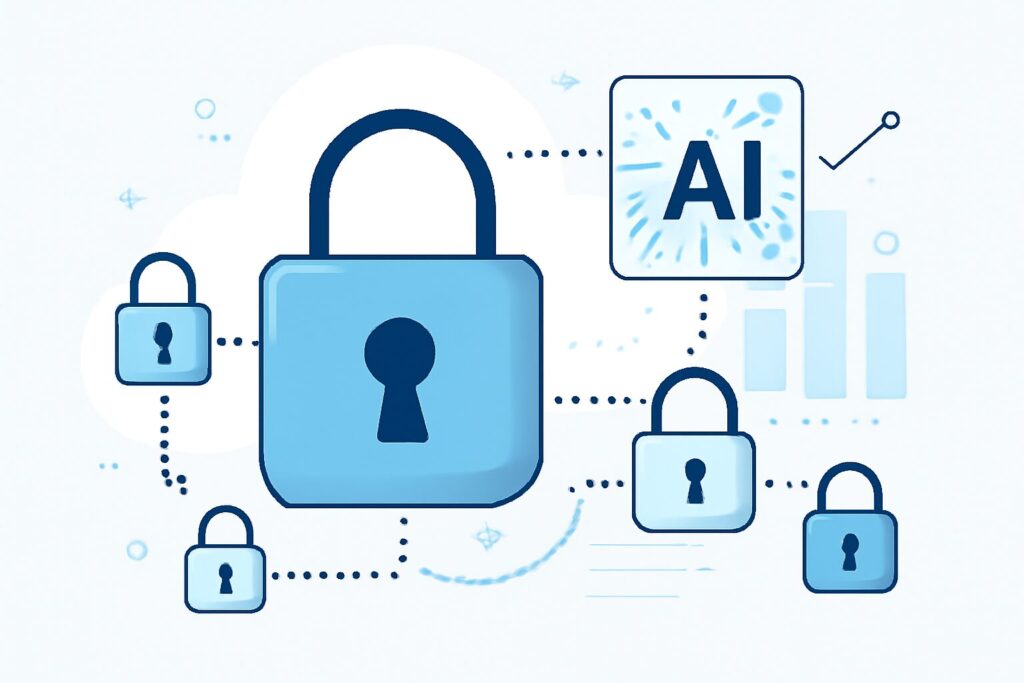
With the rapid development of AI technology, artificial intelligence has evolved from a mere “tool” to a foundational capability within enterprise information systems. Nowadays, AI is deeply embedded in search engines (such as Baidu Summary, Microsoft Bing Copilot, Google SGE/Gemini), office software, browsers, security products, and development environments. Meanwhile, the boundaries of AI applications have become extremely blurred, presenting unprecedented challenges to traditional Data Loss Prevention (DLP) strategies. This article explores the critical role of DLP in managing the risks arising from blurred AI application boundaries, helping enterprises reshape data sovereignty and ensure information security.
—
## Challenges for DLP in the Age of Blurred AI Application Boundaries
Previously, enterprises managed data flow by controlling static application and tool boundaries. Today, these boundaries have become complicated due to AI’s multidimensional penetration:
– **Tool Boundaries:** Search engines are no longer just query tools but generators of content. Document writing, email auto-completion, and log analysis are all within AI’s scope.
– **Difficulty in Distinguishing Data Flow:** User data inputs might be processed through local software, SaaS platforms, third-party APIs, or large cloud-based models, making it hard to identify where the data is used.
– **Inability to Disable Embedded AI in SaaS:** AI components in CRM, ERP, or collaboration tools are often integrated by default, making it difficult for enterprises to restrict their data scope.
– **Automatic AI Invocation in Browsers and IDEs:** Plugins and assistants can trigger large model inference without explicit user action, causing data to flow to AI systems unnoticed.
– **Tracking Challenges in Human-AI Collaboration:** AI-generated content is often edited and released by humans, complicating the tracing of original data and processing workflows.
Due to these factors, traditional DLP solutions that rely on “prohibiting certain tools” or “restricting sensitive data access” within an application are no longer adequate. Enterprises urgently need to transition toward “data sovereignty management.”
—
## How Enterprise DLP Ensures Data Sovereignty in the AI Era
Focusing on the blurred AI boundaries, enterprises should develop DLP strategies centered on **”which types of AI systems can the data enter”** rather than merely controlling tools. Specific measures include:
### 1. Data Classification Management: Defining the Scope of Data Entering AI Systems
Enterprises should adopt at least a four-tier data classification model:
| Data Level | Description | Allowed in AI Systems |
|————|————————————-|——————————–|
| Public | Information that can be freely disclosed | ✅ Fully allowed |
| Internal | For employee internal use, non-sensitive | ⚠ Allowed into consumer AI with review |
| Sensitive | Includes customer, financial information | ❌ Prohibited from public large models |
| Core Secret| Enterprise’s most critical assets and key info | ❌ Allowed only in private deployed AI |
By managing classifications, combined with strict personnel permissions and AI system categorization (consumer-level, enterprise-level, private deployment), the risk of sensitive data leakage is reduced.
### 2. AI System Categorization: Differentiating Consumer and Enterprise AI
– **Consumer AI (e.g., ChatGPT, Google Bard):** Public large models with open input/output environments and higher risk. DLP policies generally prohibit inputting sensitive enterprise data.
– **Enterprise AI:** Typically dedicated services rented by enterprises such as private cloud models supporting data isolation and access control.
– **Private Deployment AI:** Fully built and deployed internally by enterprises, ensuring maximum data security.
### 3. Strict Input Approval and Real-Time Monitoring
Multi-level approval and automated content filtering for user inputs to AI are necessary. DLP should integrate sensitive word databases, rules engines, and semantic analysis to promptly block high-risk data inputs. Simultaneously, logs must be collected for traceability and compliance.
### 4. Data Traceability in Human-AI Collaboration
As AI-generated content is often manually edited and published, tracing data origin is complex. Establishing unified logging and metadata linkage mechanisms enables real-time monitoring and recording of user input, AI output, and final publishing paths to enhance traceability.
—
## DLP Governance Recommendations for AI-Enhanced Search Engines
Search engines evolve from pure retrieval tools to generative AI applications. Enterprises should avoid simply banning search usage and instead focus on controlling proactive sensitive data input:
– **Avoid Proactive Input of Sensitive Information:** This is the most effective leak prevention strategy since any sensitive input in search boxes risks data exposure.
– **Strengthen Inbound Data Risk Monitoring:** Monitor returned results from external search engines for potential data leaks, such as exposure of enterprise secrets.
– **Integrate DLP Capabilities into Search Plugins:** Detect and block automatic large model invocation in search bars, allowing only authorized AI assistant tools access.
—
## Future Trends: How DLP Supports Building Secure AI Infrastructure for Enterprises
1. **Private Large Model Deployment and Inference Gateway Construction:**
Automate decisions on whether data can enter private models via inference gateways that filter non-compliant data.
2. **Unified Logging and Audit System Setup:**
Create centralized logging platforms covering all AI inputs/outputs to facilitate security audits and incident tracking.
3. **Emergence of “AI Governance + Data Leak Prevention” Integrated Services:**
IT service providers offer comprehensive consulting for industries like government, manufacturing, and finance to build AI risk management systems aligned with compliance.
—
## FAQ
**Q1: Why are traditional DLP strategies no longer suitable in the AI era?**
A1: Traditional DLP depends on static application boundaries and defined channels; AI systems have blurred boundaries and multilayer embedding, requiring a shift to data sovereignty management.
**Q2: How to classify data levels to ensure sensitive information security?**
A2: Usually four levels are employed — public, internal, sensitive, core secret — each with distinct AI access and approval controls.
**Q3: How to trace data origins given human editing of AI-generated content?**
A3: Through unified logging and metadata tracking systems recording input, AI output, and final publishing.
**Q4: Should enterprises ban employees from using Google Bard or ChatGPT?**
A4: A total ban is unnecessary; focus on prohibiting sensitive data inputs alongside training and technical monitoring for safe usage.
**Q5: How does DLP collaborate with AI-enabled search engine governance?**
A5: Mainly controlling proactive sensitive inputs, combined with content monitoring and plugin management to prevent leaks.
**Q6: What long-term planning should enterprises adopt facing AI risks?**
A6: Build private AI infrastructures, reinforce data classification and access control, and develop unified audit and governance systems.
—
DiLian Information Technology deeply understands the importance of DLP in the AI era. We are dedicated to helping enterprises establish security governance systems that adapt to the new era to ensure data sovereignty and compliance. If you want to learn more about building comprehensive AI governance and DLP plans, please visit [DiLian Information Official Website](https://www.de-line.net) for professional support and services. Together, let us meet the challenges of the intelligent era and safeguard your enterprise’s digital assets! ✨🔐
************
The above content is provided by our AI automation poster