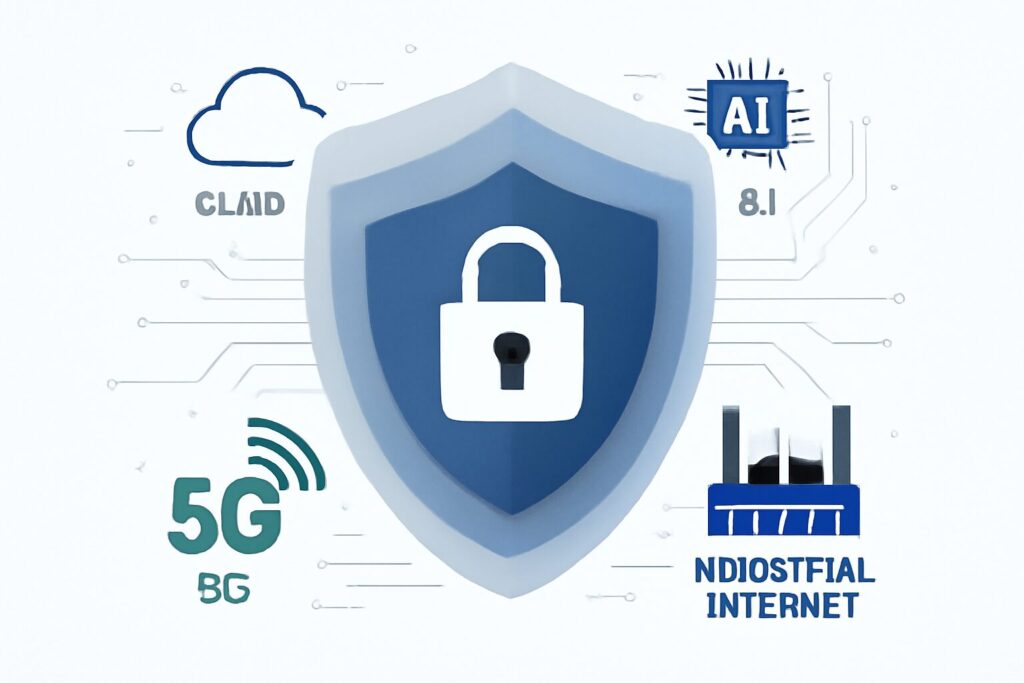
With the rapid advancement of technology, cybersecurity regulations have continuously evolved. The 2026 edition of the Cybersecurity Law marks a crucial step forward in safeguarding national security and promoting healthy development of the digital economy. At the core of this new cybersecurity framework is the widely recognized Classified Protection 3.0 (hierarchical, classified, and differentiated protection), which brings significant legal changes. This article offers a thorough analysis of the differences between the 2026 Cybersecurity Law and existing regulations, helping you grasp the key points of Classified Protection 3.0’s legal updates.
—
## Introduction
In the wave of digital transformation, emerging technologies such as cloud computing, IoT, and artificial intelligence have triggered new cybersecurity challenges. The 2026 Cybersecurity Law proposes new requirements targeting these cutting-edge fields, with a comprehensive upgrade of the “classified protection” system—better known as **Classified Protection 3.0**. Understanding these legal changes is crucial for corporate compliance, technical upgrades, and security defenses. This article analyzes the specific legal changes in Classified Protection 3.0, breaking down the key articles to keep you informed on the latest regulatory trends.
—
## Expanded Scope and Extended Definitions in Classified Protection 3.0
The 2026 Cybersecurity Law significantly broadens the definition of “critical network infrastructure,” specifically including:
– **Newly added cloud computing platforms, industrial internet nodes, and 5G/6G network slicing** as key protected objects. This explicitly extends Classified Protection 3.0 application to the core infrastructure of the future digital economy. For example, a cloud service provider’s multi-tenant environment must now comply with level-3 classified protection standards to ensure multi-party data isolation and security.
– New definitions for “network security products” and “network security services,” especially emphasizing AI security and edge computing safeguards. This effectively addresses risks like AI algorithm black boxes and the distributed attack surfaces of edge devices, which traditional protection models struggle to cover.
These changes mean enterprises must extend protection beyond traditional IT systems to strongly cover new technology assets characterized by cloud-native and edge computing. Security leaders should promptly evaluate current infrastructures and services to avoid compliance blind spots.
—
## Data Cross-Border and Cross-Jurisdiction Compliance: A Compliance Focus
Under the globalized data security context, the 2026 Cybersecurity Law enhances data export management:
– Introduces a **”graded filing plus real-time monitoring”** mechanism, requiring sensitive data to be filed with national internet offices, public security, and industry authorities before export. This greatly improves transparency and controllability over cross-border data flows.
– A new “data residency” option encourages firms to build multi-active disaster recovery centers domestically; exports of critical data must undergo strict security assessment.
For example, a multinational e-commerce company must restructure its global data syncing strategy to meet these filing requirements and deploy multi-active disaster recovery within China to ensure data resilience.
The new data export regulations are not only compliance priorities but also closely related to enterprise risk management. Companies should develop security governance that covers the full lifecycle of cross-border data ingress, circulation, and egress with real-time monitoring.
—
## Upgraded Security Assessment and Classified Protection Scheme under 3.0
The 2026 Cybersecurity Law upgrades the traditional classified protection system to a “hierarchical, classified, and differentiated protection” three-level scheme:
– Clarifies graded requirements under new technology environments such as cloud computing, IoT, and 5G/6G, emphasizing differentiated security strategies based on asset types.
– **Security assessment agencies** must now obtain updated qualification certificates, with the shortest assessment period not less than six months, reflecting higher demands on professional security evaluation.
This means enterprises must do more than just traditional classified protection filing; they need to finely segment protection levels by application type and business scenario and conduct in-depth security testing regularly according to new standards.
For instance, an industrial internet node involved in smart manufacturing must implement tighter security controls on network boundaries, device identity authentication, and data protection to comply with the new regulations.
—
## New Highlights in Personal Information and Privacy Protection
As privacy protection gains social attention, the 2026 Cybersecurity Law adds detailed provisions for personal information protection:
– Introduces the concept of **”user privacy value-added services,”** strictly prohibiting the use of personal data for algorithmic recommendation and profiling without user consent.
– Strengthens “right to deletion” and “data portability,” empowering users to delete accounts with one click and request personal data copies any time.
These innovations enhance user control over privacy and encourage enterprises to build transparent data processing workflows, thus boosting user trust. Security practitioners are encouraged to design user data management platforms to comply with these requirements, enabling unified data access, correction, and deletion.
Compliance design should also focus on algorithm transparency to prevent misuse of user data in intelligent recommendation systems and avoid legal risks.
—
## Enhanced Supply Chain Security Management and Open Source Component Responsibility
Classified Protection 3.0 specifically highlights supply chain security:
– Requires network operators to conduct security ratings on software and hardware vendors, with key components needing national security certification.
– Innovatively introduces “open source component responsibility tracking” clauses, obligating development companies to manage open source library versions and fix vulnerabilities timely.
This addresses complex supply chain risks effectively. Enterprises must strictly vet suppliers’ security credentials and maintain robust processes for compliant use of open source code and rapid patching.
For example, an internet company’s security team should establish risk scanning covering the entire procurement, development, and deployment chain to avoid unsafe open source components entering production.
—
## Upgraded Emergency Response and Vulnerability Reporting Mechanisms
The 2026 Cybersecurity Law sets higher requirements for emergency response:
– Establishes a national-level vulnerability repository and industry sharing platform; upon vulnerability disclosure, operators must self-test and report within 15 days.
– Implements graded network security incident responses; level I (major impact) incidents require emergency plans to start within 2 hours for swift reaction.
This underscores a strong commitment to quick vulnerability handling and incident response under Classified Protection 3.0. Organizations should develop closed-loop management for detection, evaluation, remediation, and reporting and increase real-world emergency drills to meet time and efficiency standards.
—
## Network Security Responsible Person System and Enhanced Legal Liabilities
To strengthen corporate accountability, the 2026 Cybersecurity Law introduces:
– Legal representatives hold primary responsibility for network security and must disclose compliance status in annual reports.
– CISOs must possess nationally certified qualifications and bear external security accountability.
Legal penalties include fines up to 20 million RMB for breaches like non-compliance on data export or classified protection, along with industry bans for offenders and their responsible persons—a strong deterrent.
This raises requirements for corporate governance and personnel qualification. Early internal security organizational restructuring and CISO certification training are recommended to minimize compliance risks.
—
## New Breakthroughs in International Cooperation and Standards Alignment
Notably, the 2026 Cybersecurity Law actively promotes alignment with international standards such as the EU GDPR and ISO/IEC 27001 and supports mutual recognition in filing compliance. It also strengthens transnational law enforcement cooperation and CERT information sharing, potentially improving international investigation efficiency significantly.
Enterprises with overseas operations should keep abreast of new cross-border compliance requirements and adopt ISO 27001 security management systems to ensure safe, compliant international operations.
—
## FAQ
1️⃣ What is Classified Protection 3.0?
Classified Protection 3.0 refers to the upgraded hierarchical, classified, and differentiated protection regime introduced in the 2026 Cybersecurity Law, focusing on emerging technologies like cloud computing, IoT, and AI.
2️⃣ How does Classified Protection 3.0 differ from previous versions?
Classified Protection 3.0 emphasizes graded classification, expands scope, enforces stricter security assessments, and adds new rules on data export and supply chain security.
3️⃣ How can enterprises ensure data export compliance?
They must conduct graded filing, implement real-time monitoring, and perform strict security assessments before exporting critical data.
4️⃣ Why must CISOs be certified?
Certification ensures accountability and professional expertise in cybersecurity responsibilities as mandated by law.
5️⃣ What are the requirements for open source software under Classified Protection 3.0?
Development companies must implement open source component responsibility tracking, strict version management, and prompt vulnerability fixes.
6️⃣ What penalties apply for violating Classified Protection 3.0?
Fines can reach up to 20 million RMB, with serious violations potentially leading to industry bans and other sanctions.
—
Driven by technology and safeguarded by regulation, Classified Protection 3.0 presents new challenges and opportunities in network security standards for enterprises. To fully comply with the 2026 Cybersecurity Law, strengthen security resilience, and protect your digital assets, visit [De-line Information Technology Official Website](https://www.de-line.net) for expert support and customized solutions! 🌐🔐✨
************
The above content is provided by our AI automation poster