**The Crucial Role of SASE in AI Security: Protecting Your Data and Models from Threats**
—
### Introduction
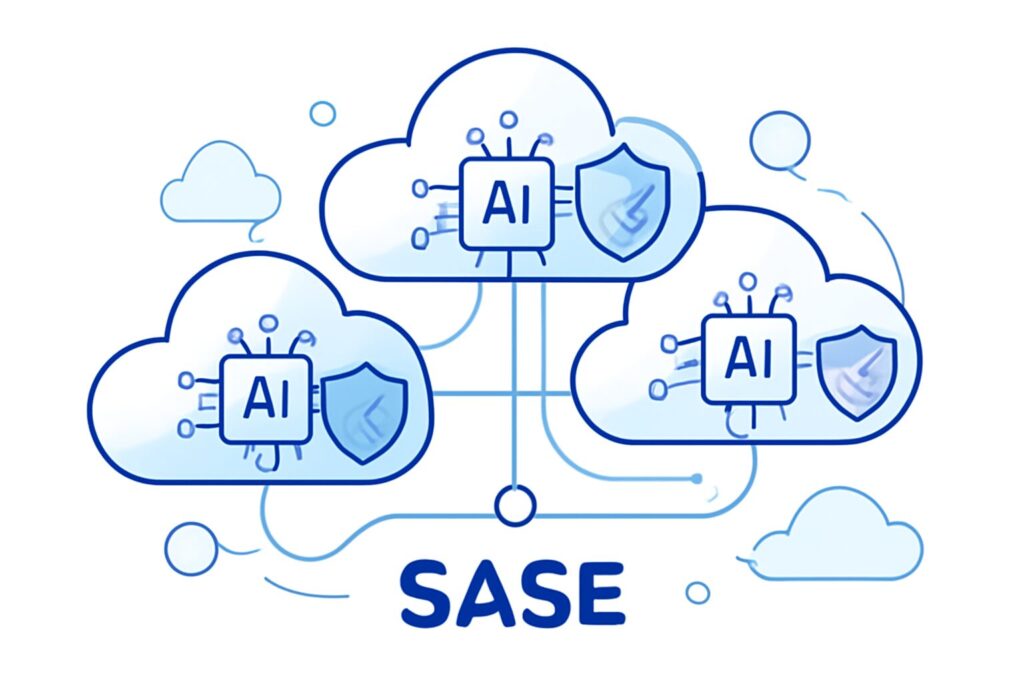
In today’s rapidly evolving AI landscape, the security of data and model integrity has become a top concern for enterprises. **Secure Access Service Edge (SASE)**, as an emerging cybersecurity architecture, unifies network and security functions to provide robust protection for distributed AI projects. Given the frequent cross-cloud data migrations and dynamic developer access, how can businesses leverage SASE core components to secure AI assets, preventing risks like data leakage and model poisoning? This article delves into how SASE supports AI security, helping you safeguard your AI investments effectively.
—
### Understanding the Close Relationship Between SASE and AI Security
SASE represents a new cybersecurity paradigm combining Network as a Service (NaaS) and Security as a Service (SECaaS), simplifying protection for remote access and cloud applications. AI data and models often flow across multiple cloud platforms and regions, increasing security challenges. Traditional security tools struggle to handle rapidly changing access demands and complex threat landscapes.
For example, during a typical AI training cycle, sensitive data is uploaded from on-premises to the cloud, and trained model parameters are shared across teams. Without strict access control and traffic monitoring, unauthorized access or data leakage is likely. Even more concerning are model poisoning attacks that stealthily introduce malicious data, impacting AI inference and causing significant business damages. Therefore, **SASE’s unified framework integrating CASB, SWG, FWaaS, and ZTNA acts as a security fortress for AI, ensuring business continuity and data privacy.**
—
### How Core SASE Components Secure AI Projects
#### 1. CASB (Cloud Access Security Broker) Guards Sensitive Data
AI training often involves Personally Identifiable Information (PII) and trade secrets. CASB, acting as a cloud access security broker, scans and identifies sensitive data patterns in real-time on AI cloud platforms, ensuring compliance during data upload and download.
For instance, in a financial AI training scenario, CASB automatically blocks unauthorized attempts, preventing improper sharing of sensitive info like credit card numbers. Detailed audit logs allow enterprises to track data operations for accountability and compliance.
#### 2. SWG (Secure Web Gateway) Prevents Malicious Traffic Attacks
AI management portals and APIs are attack targets. SWG provides URL filtering and malicious traffic detection, automatically identifying abnormal requests. With SWG, enterprises block threats such as remote Trojans and ransomware, ensuring secure and stable AI online inference.
For example, during a ransomware attack on an international medical AI platform, SWG analyzed traffic anomalies in real time and blocked the attack promptly, safeguarding patient data and model services.
#### 3. FWaaS (Firewall as a Service) Monitors Model Traffic to Block Unauthorized Connections
Inbound and outbound traffic for training sets and model hosting is vulnerable. FWaaS continuously monitors cloud traffic with contextual info, automatically blocking unauthorized or abnormal connections. For example, if software from a risky device tries to access model interfaces, FWaaS immediately blocks it to prevent data leakage.
In multi-cloud environments like AWS and Azure, FWaaS centrally manages protection policies to enhance automated, efficient security.
#### 4. ZTNA (Zero Trust Network Access) Enforces Strict Access Control and Dynamic Risk Evaluation
The zero-trust principle is critical for AI security. ZTNA ensures only authenticated users and compliant devices—such as verified developers and operators—access training data and model APIs, applying least-privilege access. It dynamically assesses risks and limits or alerts on suspicious behavior.
In distributed AI teams, if a member’s device is compromised by malware, ZTNA immediately tightens access to prevent malicious API calls or model tampering, reducing security risks significantly.
—
### Best Practices: Using SASE to Secure the AI Lifecycle
1. **Establish End-to-End Visibility and Management**
Use SASE’s logging and traffic analytics to achieve full traceability from data preparation, model training to online inference. This enhances security transparency and helps teams quickly locate and respond to risks.
2. **Automate Compliance Policy Orchestration**
Leverage AI platform metadata to automatically enforce compliance rules (e.g., PII scanning and encryption) across CASB, FWaaS and other nodes, ensuring all phases meet security standards. For example, when adjusting model datasets, the system triggers compliance checks to prevent accidental leaks.
3. **Enhance Anomaly Detection and Prevent API Abuse**
Integrate AI threat intelligence and SASE’s UEBA (User and Entity Behavior Analytics) to build intelligent alert systems. For abnormal API request rates or suspicious origins, the system promptly alerts to protect models from misuse or attacks.
—
### FAQ
**Q1: What is SASE and why is it crucial for AI security?**
A: SASE merges networking and security cloud services to dynamically meet distributed AI project security needs, protecting data and models.
**Q2: What is model poisoning and how does SASE protect against it?**
A: Model poisoning involves injecting malicious training data to skew AI outputs. SASE detects abnormal data flows and behaviors via FWaaS and UEBA, effectively defending against such attacks.
**Q3: What role does CASB play in AI security?**
A: CASB identifies and controls sensitive data in cloud AI platforms, preventing unauthorized access and leakage.
**Q4: How does ZTNA support secure access management?**
A: ZTNA applies zero-trust principles, dynamically evaluates user/device risks, and enforces least-privilege access.
**Q5: Is SASE suitable for all sizes of AI projects?**
A: Yes, especially for distributed teams requiring remote access and multi-cloud setups, SASE lowers risks through unified security services.
**Q6: How to deploy SASE for AI security on public clouds?**
A: Integrate AWS/Azure security services and configure end-to-end policies to unify management of training data and inference services. (See [Microsoft Azure Security Best Practices](https://docs.microsoft.com/azure/security/))
—
Whether you are an industry leader or an emerging AI startup, deploying a complete **SASE architecture** is essential for defending against AI security threats. By integrating CASB, SWG, FWaaS, and ZTNA, you build a comprehensive security barrier across the AI lifecycle, enabling your enterprise to thrive competitively while protecting valuable data and innovative models.
For in-depth guidance on safeguarding AI with SASE, visit [https://www.de-line.net](https://www.de-line.net) to learn about professional services from Delian Information Technology. Let’s build your AI security defenses together! 🚀🔐
************
The above content is provided by our AI automation poster