Time for Enterprise AI Security: How CIOs Can Fight AI Threats with AI Defense
In July 2026, LevelBlue, the world’s largest pure-play managed security services provider (MSSP), released a dedicated CIO survey report examining how AI is reshaping enterprise cybersecurity strategy. Covering CIOs and senior executives across multiple industries, the research explores AI-driven threat evolution, security investment priorities, organizational collaboration, and supply chain security. The core conclusion: AI is simultaneously acting as a “threat amplifier” and a “defense accelerator,” and how CIOs respond will largely determine their organizations’ cyber resilience over the next 2–3 years.
LevelBlue is recognized as the most analyst-acclaimed pure-play MSSP globally, combining AI-powered security operations, advanced threat intelligence, and elite human expertise to deliver strategic advisory, managed security, offensive security, and incident response services. Its annual CIO survey has become a key reference for tracking enterprise security decision-making trends.
Key Findings from the LevelBlue Report
The report reveals a stark contradiction: the vast majority of CIOs recognize AI’s strategic value in security, but most organizations are far from ready.
71% of CIOs believe that an adaptive cybersecurity strategy enables their companies to take greater risks with innovation. Yet only about one in five describe themselves as “highly effective” at defending against AI-powered adversaries. The same proportion say they are highly effective at using AI to enhance cybersecurity. Awareness is in place; execution lags significantly.
72% of CIOs say implementing AI-driven cybersecurity tools will be essential for improving threat detection and response capabilities. This is no longer a question of “whether” but “how fast and how well.”
From a cost perspective, 62% of CIOs report that their organizations have spent more on responding to cybersecurity threats than on preventing or detecting them over the past two years. This “respond-first” model is being rethought — CIOs are shifting security budgets from reactive response to proactive defense.
Three AI Security Priorities for CIOs
1. AI-Driven Threat Detection and Response
Nearly three-quarters (73%) of CIOs say media reports of high-profile breaches have pushed cybersecurity up the C-suite agenda, creating a rare window of opportunity for security investment. CIOs are prioritizing AI security tools — especially machine learning for pattern matching (76% planning investment) and generative AI for social engineering defense (70% planning investment).
CIOs are also significantly more concerned about AI-powered attacks than other executives. 51% believe AI-driven attacks are likely within the next 12 months, compared to 42% of senior executives overall. But only one-third of CIOs say their organizations are prepared to manage this threat.
2. Software Supply Chain Security
More than half (56%) of CIOs believe software supply chain attacks are imminent, yet only 22% say they have a highly effective view of their supply chain. As AI accelerates code generation and third-party integration, Software Bill of Materials (SBoM) compliance has become the third most important driver for supply chain security improvements. 59% of CIOs view third-party software distribution channels as moderately or very risky, significantly higher than the 49% average among other senior executives.
Notably, 70% of CIOs are already making moderate to significant investment in enhanced software supply chain security, indicating this area is moving rapidly from awareness to action.
3. Organizational Collaboration and Cultural Change
Only one-third of CIOs describe alignment between cybersecurity teams and the wider business as “highly effective.” 49% of CIOs rank “integrating cybersecurity into all business lines and projects” as their top priority for the next 12 months — well ahead of the 38% average across all leadership roles. This is not simply a tool procurement challenge; it represents a deep organizational cultural shift.
47% of CIOs cite lack of executive leadership prioritization as the biggest barrier to improvement. In response, 39% plan to focus on increasing boardroom engagement in cyber resilience discussions over the next 12 months, rather than just training general employees.
From Data to Action: A Cyber Resilience Roadmap
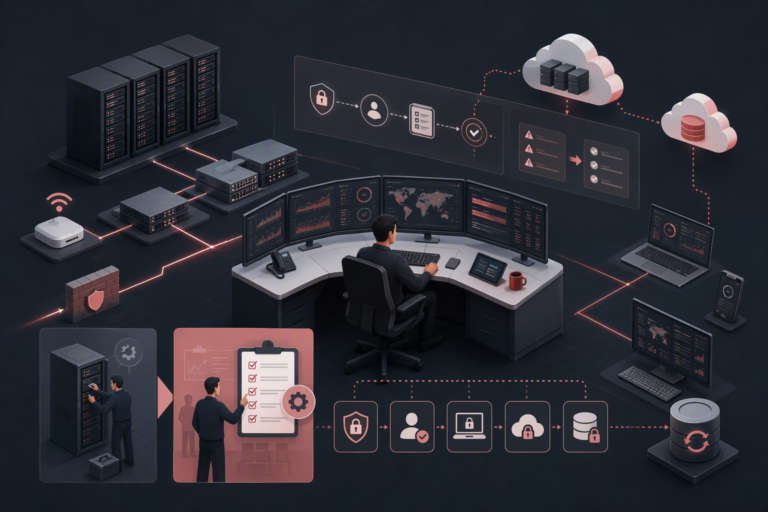
Drawing on the LevelBlue report’s key findings and enterprise best practices, we recommend CIOs build AI-era cyber resilience across four dimensions:
Assessment and Planning First Before investing in any AI security tool, complete a gap assessment of current security capabilities against AI threats. This should cover: current threat detection coverage, AI attack surface exposure, and internal team maturity in responding to AI attacks.
Proactive Defense Investment Shift security budgets from “respond after the fact” to “prevent before the event.” AI-driven threat intelligence platforms, automated incident response, and behavior-based anomaly detection systems offer the highest return on investment today.
Supply Chain Security Hardening Establish visibility into third-party software distribution channels and drive SBoM adoption in enterprise procurement processes. Focus on quality review and source tracing of AI-accelerated third-party code.
Organizational Capability Building Elevate cyber resilience from an IT department responsibility to a corporate governance议题. Set KPIs that connect security outcomes to business results, and drive sustained board-level attention to security investment.
AI Security Is Not Just a Tools Problem — It’s a Strategy Problem
LevelBlue’s research makes one thing clear: organizations that position AI security as a strategic priority are far more likely to maintain resilience in an AI-driven threat environment. Purchasing tools alone is not enough to keep pace with the evolution of AI attacks — what’s needed is the coordinated升级 of security architecture, organizational processes, and personnel capabilities.
The report also points a clear direction for security service providers: CIOs are actively seeking partners to fill capability gaps. Over the next two years, 47% of CIOs plan to work with incident response specialists, and 36% plan to engage threat intelligence providers — both significantly higher than the actual engagement rates of the past 12 months.
DELine Technology provides comprehensive cybersecurity consulting services, including security architecture assessment, AI security planning, security solution selection and integration design, and security operations system building. Our consulting team brings extensive experience in ISO 27001 certification auditing and ITSS service standard implementation, enabling us to develop practical, actionable cyber resilience improvement paths tailored to each enterprise’s business context. To learn more about AI security solutions or schedule a security assessment, visit our website or reach out through our contact page for dedicated advisory support.