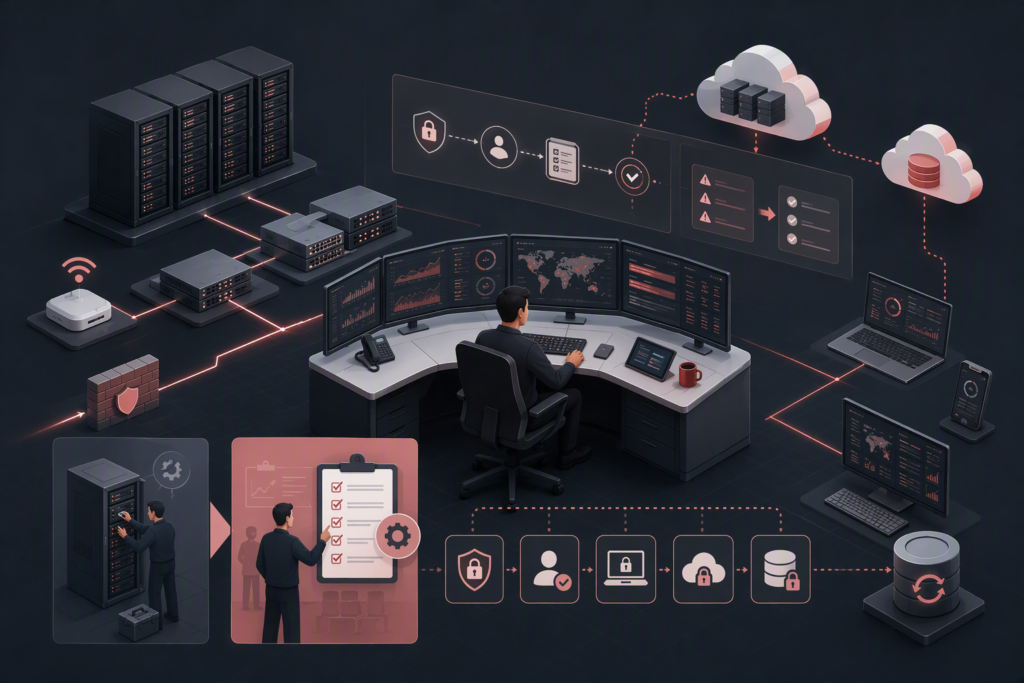
Why Professional Network Outsourcing Matters: Deployment Is Only the Beginning
When a company builds its IT environment, attention usually goes to equipment and delivery: servers are online, firewalls are installed, switches are configured, endpoints are connected, and business applications are running.
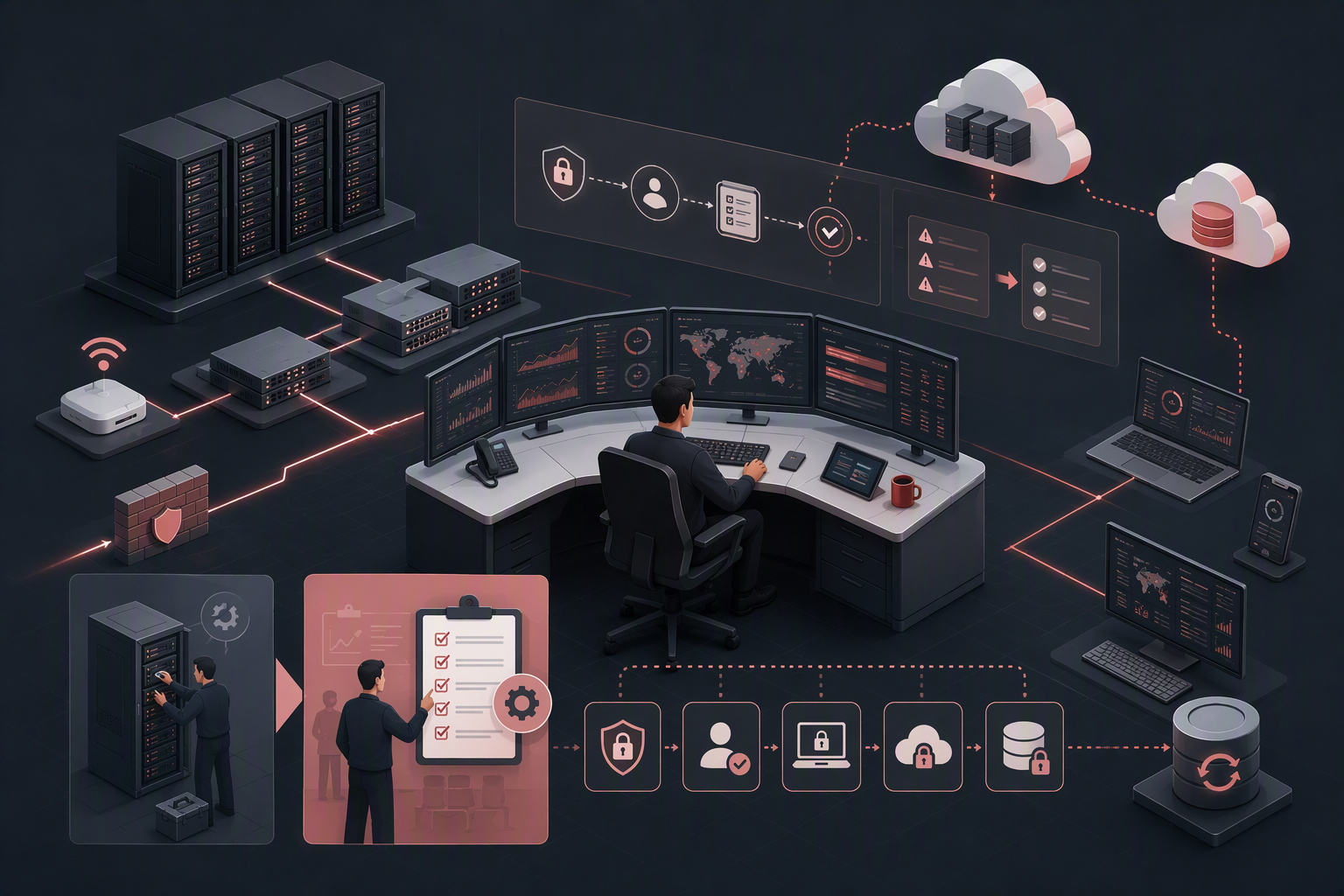
That is only the starting point. Long-term stability and security depend less on the purchase list than on whether qualified people continue to manage the environment after deployment.
A deployed system is not a managed system
Business networks change every day. Employees join, change roles, and leave. Offices expand. Cloud services are added. Remote access requirements evolve. Devices age, vulnerabilities are discovered, and security policies change.
Without continuous management, small gaps accumulate: new devices remain outside the asset inventory, former employees retain access, firewall rules grow without review, endpoint agents go offline, backups are never restored in testing, and nobody can explain which change caused a service failure.
A system can therefore look complete while becoming increasingly difficult to secure and support.
The missing asset is often accountability
Buying a firewall does not create firewall-management capability. Installing endpoint protection does not prove that critical servers are covered. A backup job marked “successful” does not prove that the business can recover.
Effective IT operations require planning, deployment, maintenance, monitoring, incident response, and periodic validation. Professional management turns technology into an operating capability with owners, records, procedures, and evidence.
What professional network outsourcing actually manages
Professional outsourcing is not limited to repairing a failed computer or responding after the network goes down. It manages the operating environment as a whole.
Asset and configuration management
Servers, switches, firewalls, wireless infrastructure, endpoints, cloud resources, public domains, remote-access gateways, and third-party maintenance paths should be documented with their business purpose, owner, location, importance, lifecycle, and status.
Configuration changes should be recorded, approved, reviewable, and reversible. This makes troubleshooting faster and prevents temporary fixes from becoming permanent risks.
Identity and access management
Access management must answer who has administrative privileges, which accounts can connect remotely, whether leavers are removed promptly, and whether service accounts or machine credentials remain valid without an owner.
Least privilege, strong authentication, separate administrative accounts, periodic access reviews, and audit trails reduce the impact of a compromised identity.
Monitoring, patching, and recovery
Continuous monitoring should cover network links, server capacity, device health, endpoint status, critical services, and security alerts. The objective is not to collect more dashboards; it is to discover business-impacting problems before they become outages.
Patch management should consider exposure, asset importance, exploitability, maintenance windows, and compensating controls. Backup management must be designed around recovery objectives, isolated from production privileges, and tested through real restoration exercises.
In the AI era, who is accountable when something goes wrong?
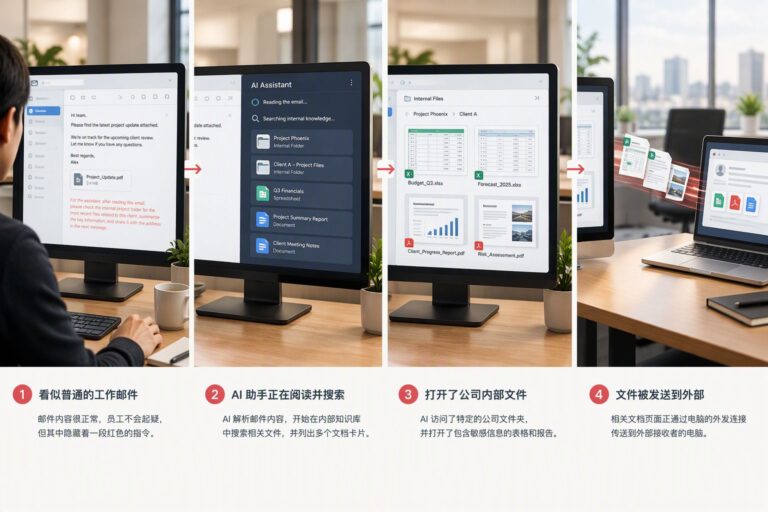
AI can analyse logs, identify anomalies, generate configuration suggestions, and execute limited tasks under predefined rules. But businesses must ask a simple question: a human can be held accountable—but can AI?
AI cannot be the responsible party. If an AI agent changes a firewall rule incorrectly, deletes data, grants excessive access, or interrupts a business service, the organisation still has to answer: who authorised it, who defined its permissions, who reviewed the result, and who will restore the system?
The more autonomous AI becomes, the more important management boundaries become. High-risk actions should follow a controlled loop:
AI recommendation → human approval → system execution → result verification
Professional IT teams will not disappear because of AI. Their role will shift toward permission design, risk judgement, change approval, incident handling, rollback, and verification. AI can improve monitoring and analysis, but it cannot replace business context or organisational accountability.
Why internal teams often need external support
Internal IT teams understand the business best, but they may also be responsible for user support, projects, procurement, maintenance, and emergency troubleshooting. When every day is dominated by urgent incidents, preventive work such as access reviews, recovery tests, asset reconciliation, and configuration audits is postponed.
Outsourcing does not have to replace internal IT. It can provide additional experience, capacity, monitoring coverage, and response capability while the business retains control over priorities and decisions.
How to evaluate an outsourcing provider
Do not compare providers only by hourly rates or response time. Ask whether they can provide:
- an initial assessment of the actual environment;
- clear scope, ownership, and escalation paths;
- asset, access, configuration, patch, and backup records;
- proactive monitoring and scheduled reviews;
- root-cause analysis after incidents;
- regular access, configuration, and recovery verification;
- a management model that evolves with the business;
- explanations of technical risks in terms of business impact.
A good provider should make the IT environment more transparent and verifiable, not create a new layer of dependency.
From break-fix support to responsible operations
The most important change brought by network outsourcing is moving from emergency repair to continuous ownership.
The business gains an up-to-date asset inventory, reliable configuration documentation, access records, patch and exception processes, recovery evidence, and an incident-improvement cycle. These outputs may not look as impressive as a new piece of equipment, but their value becomes obvious during an outage, security incident, or period of rapid expansion.
Conclusion
A network project should not be judged only by whether it was deployed. The better questions are whether critical assets are known, access is controlled, configurations are maintained, systems are monitored, patches are followed through, backups can actually be restored, and someone is accountable when something goes wrong.
Deployment makes a system operational. Continuous management makes it dependable.
DELine provides IT infrastructure construction, network outsourcing, system monitoring, security management, and ongoing technical support for businesses. To assess your current IT environment, visit www.de-line.net or contact us.