AI Voice and Video Scam Protection: Why a Familiar Face or Voice Is No Longer Proof
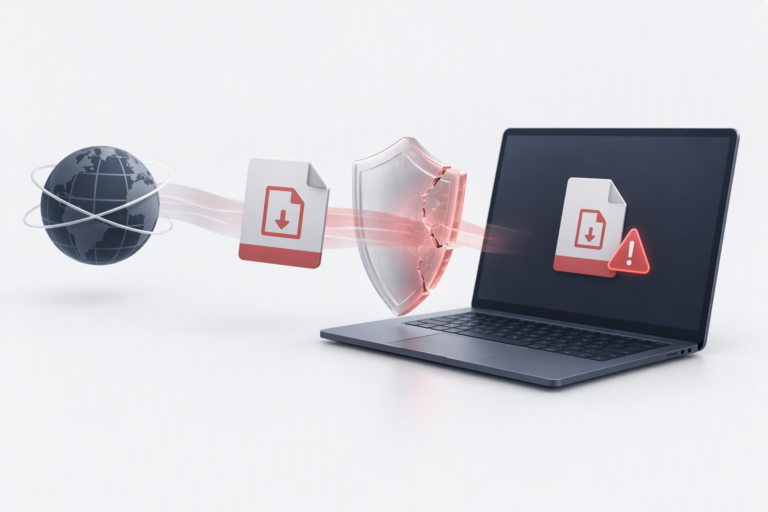
Can a familiar voice on the phone or a familiar face on a video call confirm who is really making a request? For enterprise payments, account recovery, identity proofing and emergency approvals, that assumption is becoming unsafe. Generative AI can create or alter audio, images and video; attackers may also inject manipulated media into a remote verification process. The issue is therefore not limited to false content circulating online. It is a control problem: the signals an organization uses to establish identity and authorize an action may be imitated or bypassed.
In an alert issued on November 13, 2024, the U.S. Financial Crimes Enforcement Network (FinCEN) said it had observed an increase in suspicious activity reporting that described suspected deepfake-media use, particularly fraudulent identity documents used to circumvent customer identification and verification. MITRE ATLAS also documents AI-model evasion through adversarial data and deepfake generation, including the possibility of attacks against systems that rely on AI-based biometric authentication. These sources do not establish a universal incident rate across industries, but they show why AI voice scams and AI video scams belong in an organization’s identity, fraud and authorization threat model.
The real risk: a verification system may be checking the wrong input
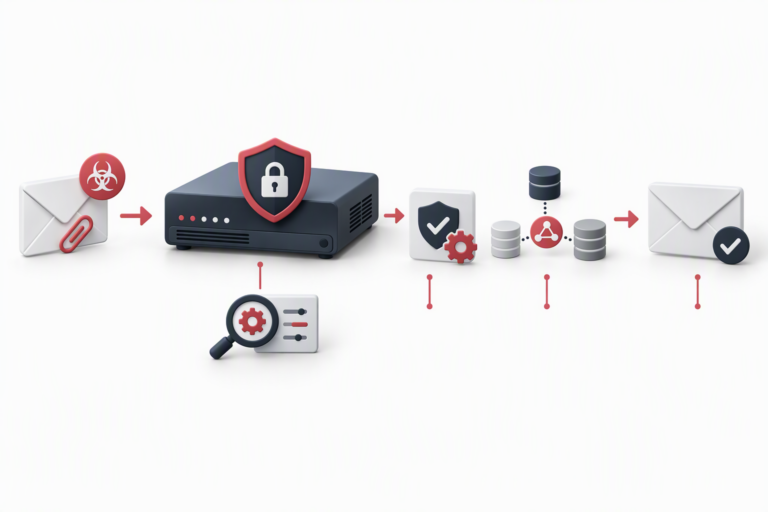
Voice and video workflows have often treated a live response as evidence that a person is physically present. Earlier controls focused heavily on preventing an attacker from replaying a recorded voice or video. Real-time synthesis and digital-media injection change that assumption: manipulated content may respond to a prompt, and a virtual camera or compromised capture path may deliver media that did not come directly from a trusted sensor. A biometric comparison can still be useful, but a match against an untrusted input does not, by itself, prove that the legitimate person is present.
That does not mean every voice-recognition or liveness control is useless, or that every video call should be presumed fraudulent. It means organizations should treat detection as one risk signal rather than an absolute verdict. Deepfake detectors can produce false positives and false negatives, and attackers’ methods evolve. No single media-analysis product can replace sound identity proofing, authorization checks and accountable exception handling.
Find the workflows where impersonation would matter most
Start with potential impact, not with a product purchase. Map the processes in which a believable impersonation could trigger a consequential action:
- Payments: Can a supplier bank-account change, urgent wire transfer or payment release be approved from a phone or video call alone?
- Identity and account recovery: Does new-account enrollment, remote customer verification or administrator recovery depend on a single face or voice check?
- Privileged actions: Can someone approve emergency access, disable a security control or authorize sensitive data exports without an independent reviewer?
- IT service desk: When resetting a password, changing an MFA device or updating a recovery address, are a caller’s name, displayed number or familiar voice treated as sufficient proof?
FinCEN’s alert focuses on financial institutions and related fraud. It should not be presented as an all-sector incident statistic. Its broader lesson is about control design: attackers exploit the gap between an identity clue and evidence that the requester is authorized to perform a specific action.
Build an authorization chain that does not depend on one voice or image
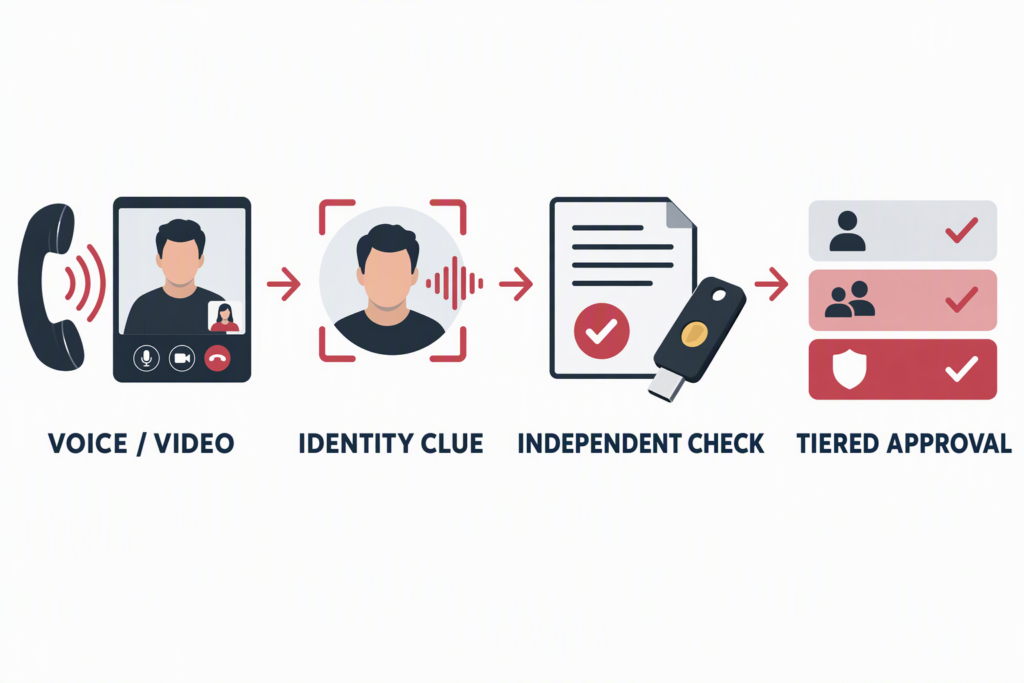
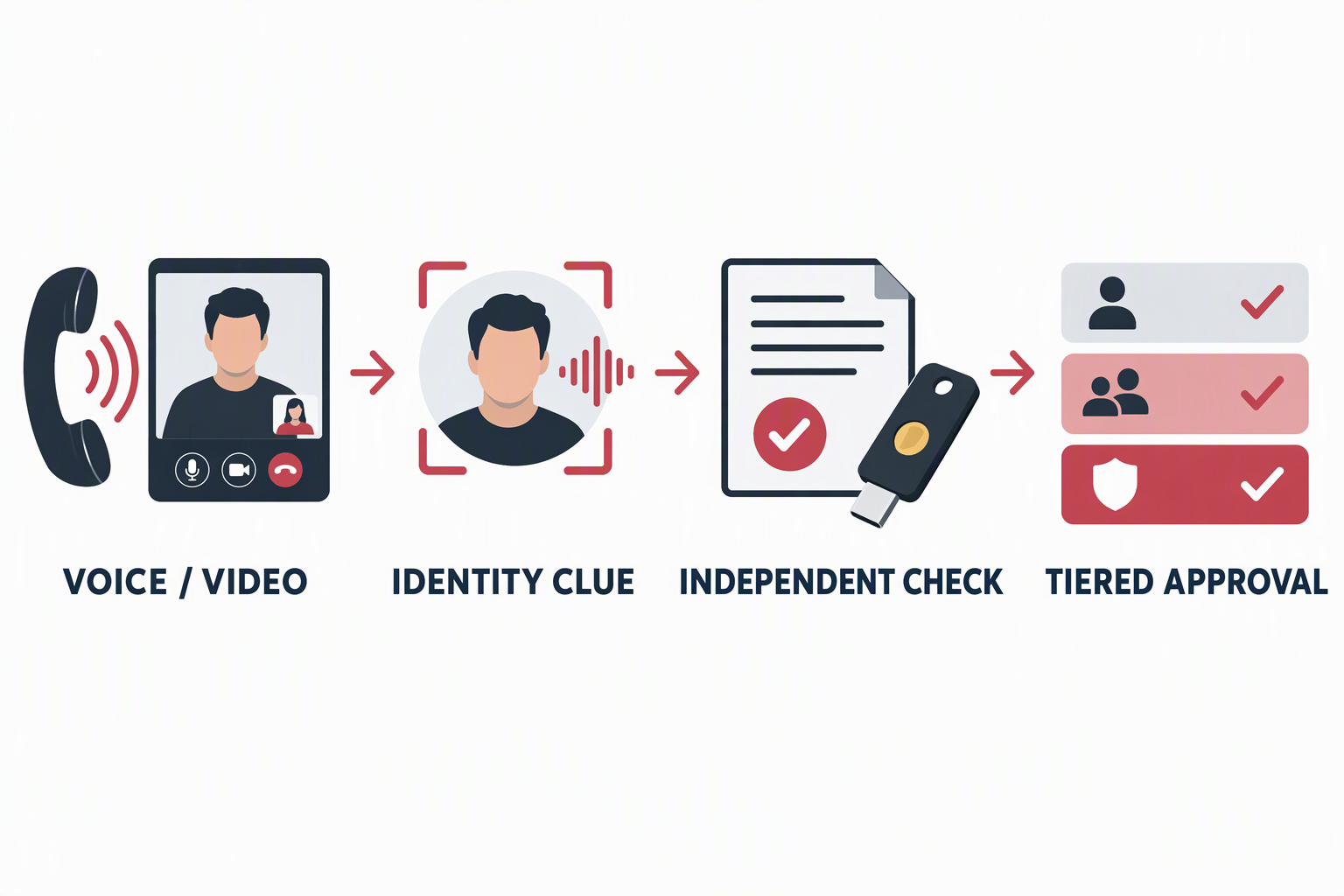
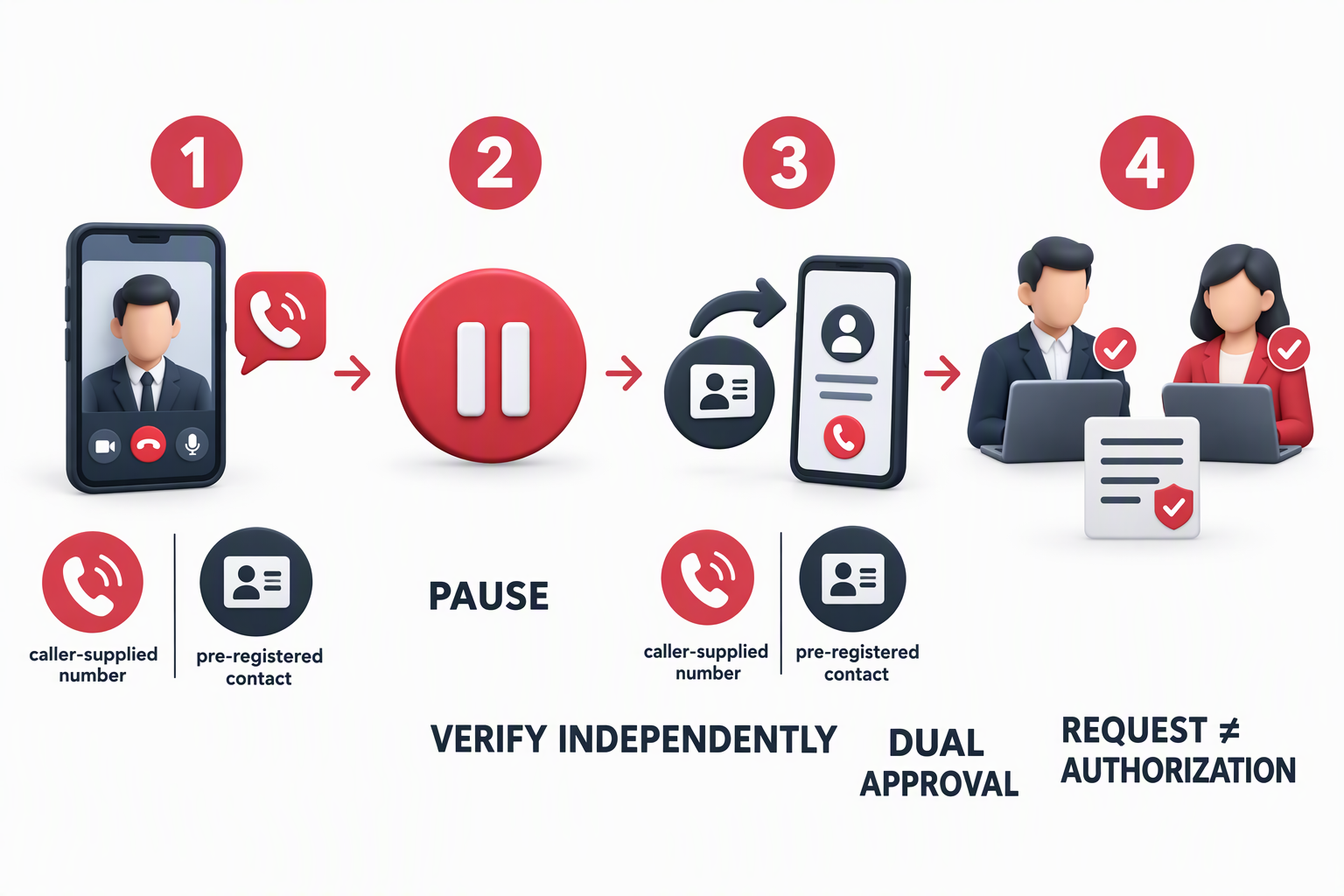
Separate identity confirmation from action authorization. A caller may know an employee’s name, team and project details, or appear convincingly on video. Those details are clues, not proof of permission. Before changing payment details, resetting credentials or releasing funds, verify the requester’s authority and confirm that the requested action fits the approved process.
Use an independent second channel for high-risk actions. Call back using a number already recorded in the enterprise directory, contract or established supplier record—not a number supplied during the suspicious conversation. A registered enterprise application, device-bound credential or hardware security key may provide another independent confirmation method. The second channel must not be created or controlled by the same questionable interaction. SMS codes are not sufficient for every threat model; choose a stronger factor where the risk warrants it.
Add delay, review and dual control. Large payments, beneficiary changes and emergency security exceptions can require a cooling-off period, a second approver or review by a separate function. Urgency may justify an accelerated path, but not the removal of verification. Define who can approve, which independent channel must be used and what evidence must be recorded afterward.
Protect the remote identity-proofing capture path
NIST Special Publication 800-63A-4 discusses risks in remote identity proofing, including manipulated media and injection attacks. Its guidance includes technical measures to increase confidence that media comes from a genuine sensor, analysis for signs of tampering, protected communications, and presentation-attack detection. For attended remote processes, it also addresses training proofing agents to notice signs of manipulation and using unpredictable human-in-the-loop cues. Applicability depends on the organization and the requirements it is subject to; these provisions should not be misrepresented as a universal legal mandate for every business.
Organizations can use the guidance as a practical review checklist: Can an unauthorized virtual camera or emulator enter the capture path? Are identity documents and video protected in transit? Does liveness testing consider digital injection, not just printed-photo replay? Have detection tools been evaluated against both genuine and manipulated samples, with false-positive and false-negative rates documented? Do human reviewers have a clear escalation, refusal and redress process? Detection should inform a decision; it should not automatically label an applicant a fraudster.
Train staff to follow the process, not to hunt for visual glitches
Training employees to spot lip-sync errors, flickering pixels or strange audio can create a false sense of security. Better media quality may make such signs harder to notice, and ordinary network or device problems can produce similar symptoms. Train staff to recognize process-level warning signs: unusual secrecy, pressure to bypass normal approvals, a last-minute change to payment details, or a request to disclose credentials or disable a control.
The prescribed response should be simple: pause the action, end or suspend the questionable interaction, verify through a known independent channel, and report the concern. Give employees a non-punitive way to escalate and review a suspicious request so they are not tempted to approve it merely to avoid delaying the business. Exercises should combine phone, video, email and messaging scenarios. Measure whether teams complete independent verification, escalation and recordkeeping—not whether they can identify a particular AI artifact.
Treat deepfake risk as an ongoing control responsibility
Security, finance, HR, customer service and IT should jointly inventory workflows that rely on voice or video. Identify single-channel approvals, contact details that can be changed during a call, account-recovery routes and exception paths. Rank them by impact and exposure; then redesign the highest-risk cases first, such as payment transfers, privileged account recovery and remote enrollment. Use tabletop exercises or controlled tests to confirm that the revised process is workable under realistic time pressure.
Keep an auditable record of the request, the independent verification method, the approving people, the decision and any exception rationale. Review false positives, false negatives, user friction and attempts to bypass the process, then adjust controls and training. If biometric data or video is retained, review privacy risks, access controls, retention periods and deletion procedures as part of the same governance effort.
The goal of AI voice and video scam protection is not to prove that every image or voice is genuine. It is to ensure that critical business actions remain safe even when sensory evidence cannot be fully trusted. Organizations should demote a familiar face or voice from final proof to a risk signal—and support consequential decisions with independent identity factors, authorization checks and reviewable approvals.
References
- SC Media: Deepfakes are becoming a security control problem, not just a media problem
- FinCEN: Alert on Fraud Schemes Involving Deepfake Media Targeting Financial Institutions (November 13, 2024)
- NIST SP 800-63A-4: Identity Proofing Requirements
- MITRE ATLAS AML.T0015: Evade AI Model
Strengthen identity and authorization controls with DELine
DELine helps organizations review high-risk identity-proofing and authorization workflows, connect endpoint, identity and access controls with cybersecurity governance, and design practical verification and incident exercises. Visit DELine or contact our team to discuss your enterprise security needs.