## Introduction
In recent years, AI-driven attacks have become a trending topic in the field of information security. While numerous reports emphasize “AI can be used for cyber attacks,” an important fact is often overlooked: not all attacks relying on AI technology are truly “AI-driven attacks.” This article elaborates on what truly constitutes AI-driven attacks, analyzes their core identification elements, typical cases, and how enterprises can effectively build a defense system to resist increasingly intelligent threats. For professionals concerned with cybersecurity, AI security, and automated attack defense, this is essential knowledge! 🚨
—
## What Is an AI-Driven Attack? Differentiating “AI-Assisted” from “AI-Driven Attacks”
In the security community, the term “AI attack” is overgeneralized. Some attacks merely use AI technology to “assist,” such as employing AI to generate phishing email templates, but the actual attack decisions and iterations depend on human control — this cannot be considered truly AI-led.
### Key Characteristics of AI-Driven Attacks:
1. **Automated Decision-Making**: The attack tool uses built-in models to evaluate intelligence in real time and autonomously selects attack targets and vulnerabilities.
2. **Autonomous Learning and Optimization**: Using reinforcement learning, the attack system continuously improves attack strategies through large-scale experiments instead of simply reusing preset scripts.
3. **Minimal Human Intervention**: Humans only provide initial commands or samples; subsequent execution and ongoing optimization are fully automated by AI.
In other words, AI plays the leading role throughout the attack chain, minimizing human involvement, forming a more threatening and covert security risk.
—
## Typical AI-Driven Attack Case Studies
Practical cases help us comprehensively understand the power of AI-driven attacks:
### 1. AI-Powered Highly Realistic Phishing Emails
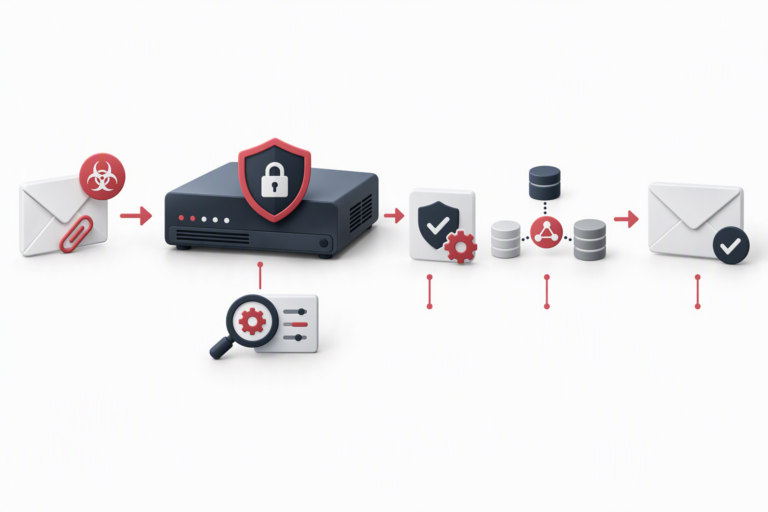
By leveraging Transformer models like OpenAI’s GPT-3 or GPT-4, attackers can simulate the communication style of internal enterprise employees and automatically generate highly targeted social engineering content. Based on click and response feedback, the model adjusts themes and language in real time, successfully deceiving employees with much higher success rates and stealth than traditional phishing templates. 📧
### 2. Autonomous Vulnerability Scanning and Rapid Exploitation
AI automatically identifies system vulnerabilities through deep learning-based binary analysis and rapidly tests attack vectors. With continuous feedback loops, AI optimizes exploit scripts, adapts to different environments, and launches attacks concurrently at massive scale on cloud platforms, greatly improving efficiency and coverage.
### 3. Deepfake Social Engineering
AI synthesizes voices or videos of key targets, achieving highly credible identity deception. Attackers use deep neural networks and audio-video synthesis technology to fabricate false instructions that victims find hard to distinguish, enabling theft of funds or sensitive information. 🎥
These examples reveal the evolving challenges AI brings to cybersecurity — advancing from an “assistive” phase into an era of autonomous learning and decision-driven attacks.
—
## Technical Implementation Essentials of AI-Driven Attacks
Delving into technical details helps precisely identify and defend against these high-risk attacks:
### Model Choices and Frameworks
– **Transformer/GPT models** generate realistic social engineering content, flexibly changing attack dialogues.
– **Deep Reinforcement Learning (DRL)** automatically optimizes attack paths by extensive experimentation to discover the most effective methods.
### Data Feedback Loop Design
Attack scripts embed monitoring modules to relay execution outcomes back to AI models, enabling self-iterative optimization in real environments and creating ever-evolving attack chains.
### Large-Scale Concurrent Execution Capability
Cloud computing platforms and container orchestration enable expansion to thousands of parallel attacking instances, demonstrating AI attacks’ scalability and widespread threat.
Using these techniques, attackers achieve highly intelligent attacks at very low human cost, posing massive challenges to enterprise defenses.
—
## Practical Strategies to Defend AI-Driven Attacks
Facing intelligent attacks, traditional defense methods fall short. Enterprises need a comprehensive upgrade:
### Anomaly Interaction Detection Technologies
Apply machine learning for behavioral correlation analysis, focusing on diverse, high-frequency social engineering emails and messages. Behavior anomaly detection models promptly identify and block potential phishing or deception, cutting off AI-driven attack chains.
### Incorporate AI Automated Attack Tools in Red Team Exercises
Simulating AI attack tools during red team penetration tests allows enterprises to realistically assess defensive capabilities and identify weak points, enhancing defense specificity and real-world effectiveness.
### Deploy Intelligent Honeypot Systems
Design honeypots that provide real-time feedback to attackers’ AI models, luring them to continue evolving their attack patterns. Security teams analyze collected samples to constantly adapt detection rules, forming a proactive defense loop.
Additionally, combining threat intelligence and endpoint protection for early AI-based attack warnings is critical.
—
## Frequently Asked Questions (FAQ)
**Q1: Are all attacks involving AI truly AI-driven attacks?**
No. AI-assisted attacks do not necessarily mean AI fully controls attack decisions and optimization.
**Q2: What are the core criteria for identifying AI-driven attacks?**
Automated decision-making, autonomous learning and optimization, and minimal human intervention.
**Q3: How can enterprises quickly spot AI-driven attacks?**
Focus on monitoring high-frequency, diverse social engineering content with behavioral correlation and anomaly detection methods.
**Q4: How do AI-driven vulnerability exploitation attacks differ from traditional ones?**
They use deep learning models to autonomously detect and refine exploit strategies, greatly boosting efficiency and success rates.
**Q5: What advantages do honeypot systems provide against AI attacks?**
They lure attackers and supply training data to AI models, improving detection rules and enhancing defensive capabilities.
**Q6: Should red teams necessarily use AI automated attack tools?**
Not mandatory, but including such tools helps realistically evaluate defenses against AI-driven threats.
—
In today’s digital-intelligent convergence, understanding and identifying AI-driven attacks is paramount for enterprise cybersecurity. Only by grasping their technical essence can one build a robust, adaptive defense to prevent immense damages from intelligent attacks. By focusing on core standards, cases, and defense concepts, you can proactively prepare future security perimeters.
The covert yet powerful AI-driven attacks lurk in the shadows of the network. De-Line Information Technology dedicates itself to providing leading security solutions to help build intelligent defense systems and confidently confront next-generation cyber threats. Visit our website https://www.de-line.net to learn more about enterprise security services and jointly safeguard the digital future! 🔒✨
************
The above content is provided by our AI automation poster