Hardware USB Keys for API Token Management: A Masterclass in Overengineering
A Chinese tech media outlet recently ran a sponsored piece for Lenovo’s latest product — the “Token Token” (词元宝), a fingerprint-secured USB drive that stores API keys for large language models. The article spins a fictional story about a company whose API tokens were stolen after an IT staffer shared them in a company group chat. The hero? A hardware USB key that “locks” tokens away from prying eyes.
Source: 20 Billion Tokens Stolen Overnight!
After reading it, one thought comes to mind: this is the textbook definition of overengineering — taking a problem that software solves trivially and wrapping it in hardware to make it look like innovation.
Don’t get me wrong: token management is a real problem. API key leakage, uncontrolled usage, chaotic key distribution — these are genuine pain points for any organization using LLMs at scale. The issue is that the proposed “solution” demonstrates exactly what happens when a hardware company looks at a software problem.
By the Time You Ship USB Drives, a Proxy Is Already Running
The article’s premise is legitimate: an IT admin has to distribute API keys to dozens of employees, and doing it one-by-one is tedious and error-prone.
The standard software answer? Deploy a LiteLLM proxy. Set it up on a single 2C4G Linux VM, create virtual keys, and let users authenticate through your existing identity provider. Each user gets their own key automatically. Zero manual distribution. Total deployment time: under 30 minutes. No procurement, no logistics, no HR tracking hardware inventory.
The Lenovo approach: Onboard a new employee → order a USB drive → wait for shipping → plug it in → register fingerprint → configure the client → log who took which drive. Employee leaves? Chase them for the hardware back. Drive breaks? They’re blocked until a replacement arrives.
Using 2026’s silicon to solve a problem that a single configuration file could handle in 2020 — that’s not innovation, that’s technological regression.
“Keys Can’t Be Extracted” — And Then What?
The article keeps insisting that “keys cannot be exported or shared.” But here’s the inconvenient question: how does a background AI agent authenticate when there’s no human around to swipe a fingerprint?
Every autonomous workflow — overnight batch jobs, scheduled report generation, CI/CD pipelines, automated monitoring agents — needs to call LLM APIs without human interaction. Either the USB key has a “bypass mode” (defeating the stated security purpose), or it only works for interactive use (rendering it useless for automation).
More fundamentally, plain-text API keys on employee machines was never the real threat surface. If an employee’s workstation is compromised to the point where an attacker can read arbitrary files, you have much bigger problems than stolen tokens. Real enterprise protection happens at the proxy layer: domain allowlisting, IP restrictions, usage anomaly detection, automatic throttling — all software capabilities that don’t require touching hardware.
The Architecture That Was Conveniently Ignored
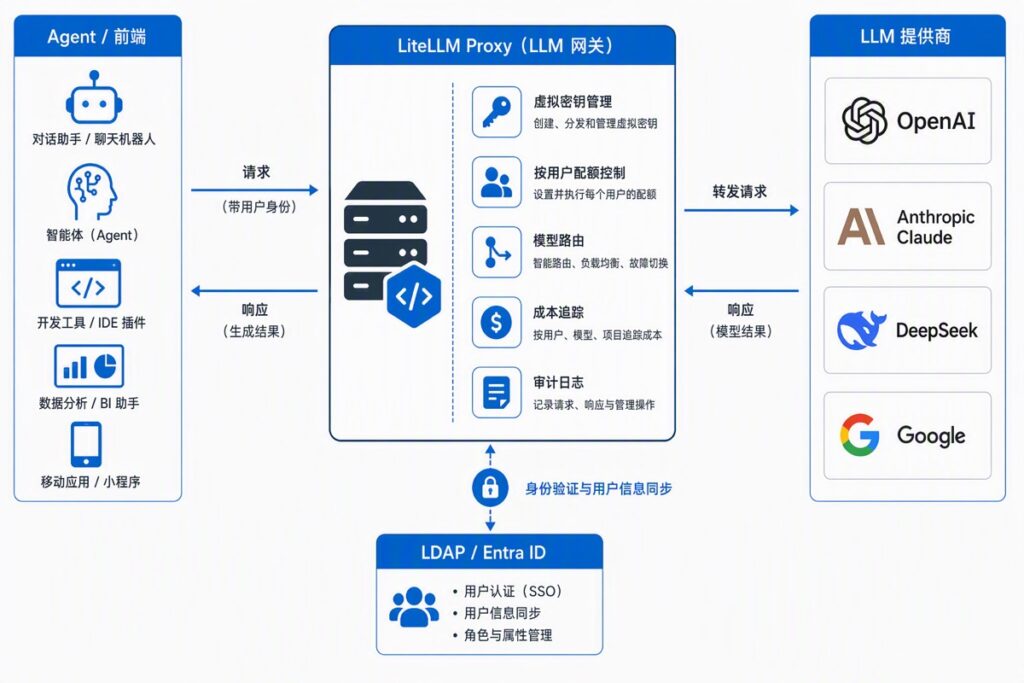
Here’s what a proper enterprise token management stack looks like:
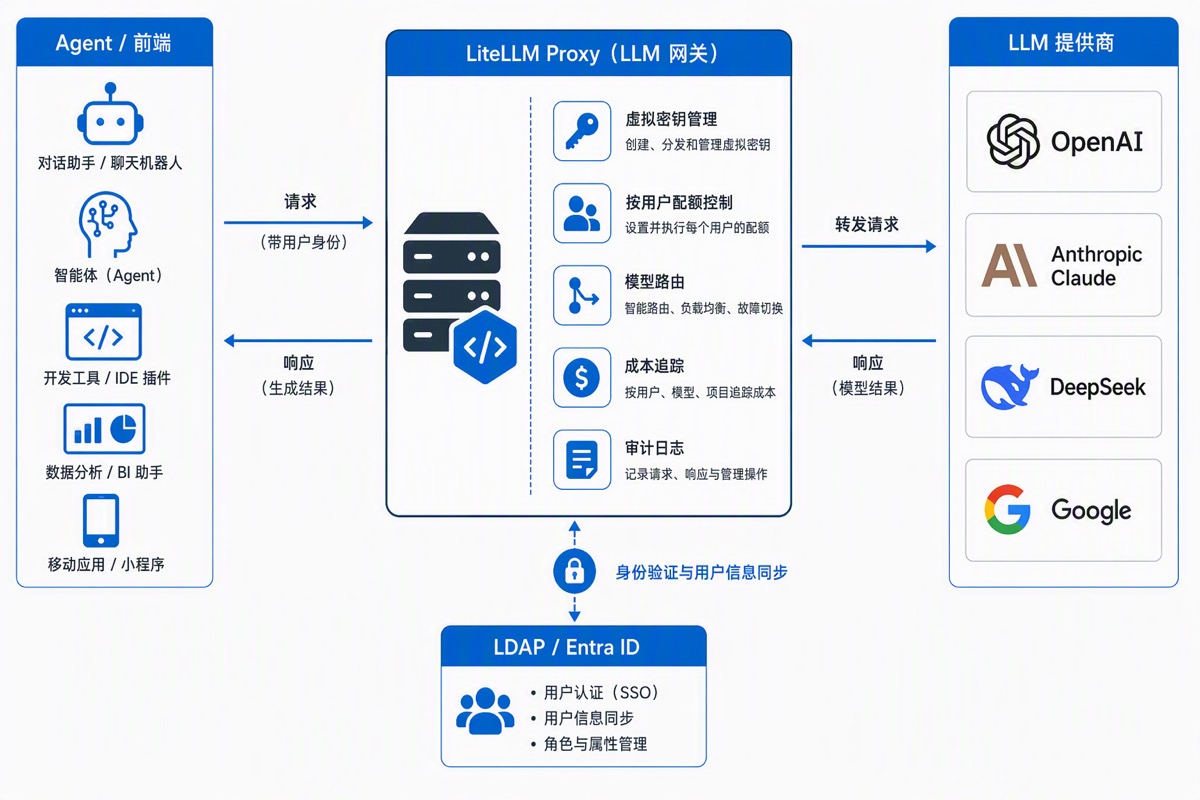
LiteLLM is open source, self-hosted, and costs nothing in licensing. It runs on modest hardware. Integrate with LDAP or Entra ID — the directory your organization already uses. Create virtual keys, bind each to a person or team, set per-minute/per-day/per-month token caps, control which models each user can access, and route requests to the cheapest available model by default.
The only thing you distribute to users is a proxy URL and their personal key. Every AI agent just needs a BASE_URL change.
Which approach sounds like something a serious IT organization would deploy?
Closing Thoughts
Lenovo’s Token Token is a hardware solution to a security gap that doesn’t exist. The real pain points of token management — key distribution, usage quotas, audit trails, cost allocation — are none of them solved by “locking keys in a USB drive.” Every single one of them is handled comprehensively by a software gateway running at near-zero marginal cost.
This article serves as a perfect case study in solutionism: when your team’s best answer is “give everyone a USB drive,” what you may actually need is an architect who understands how modern infrastructure works — not a faster supply chain.
If you’re evaluating how to manage LLM access and token consumption across your team, there are proven, cost-effective approaches that don’t involve shipping hardware to every employee.